

Imagination Childcare Academy in Rochester, NY uses a project-based learning approach that weaves hands-on experiences, such as farm visits and preparing dishes, into classroom learning. By exploring scientific and economic concepts, students carry what they learn into future lessons and conversations at home, while teachers allow their natural curiosity to help guide where the learning goes.
QUALITYstarsNY interviewed Education Coordinator Miranda Goodwin
Can you tell us about your current farm-to-table project and how the children’s interests help guide the direction of the project?
We always start our unit knowing where we are headed–our culminating activity. For this unit, our end goal is to prepare a feast. The teachers know the Standards the unit must address, so they keep those in mind when choosing the materials they will use for investigations and the books they will read. The students are the determinants of the fine details of the unit, the order in which things are done, and the amount of time spent on different mini themes. For this unit, many of the teachers begin by simply asking “What is a Feast?” They look at pictures and read books to activate prior knowledge. From there, they build connections on their own experiences with feasts. They ask a lot of guiding questions, such as
- How do you prepare a feast?
- Where does the food come from?
- How does it get there?
- What tools do grocers and farmers use?
- What does the earth give us?
- How do we use our five senses to explore?
Through these types of questions, we are able to determine what prior knowledge the students already have and what experiences they need to have to gain a better understanding. We are also able to determine how interested they are in the different subtopics and how deeply they will go into those themes.
What do the children experience during their visits to the local farm, and how do you build on those experiences back in the classroom?
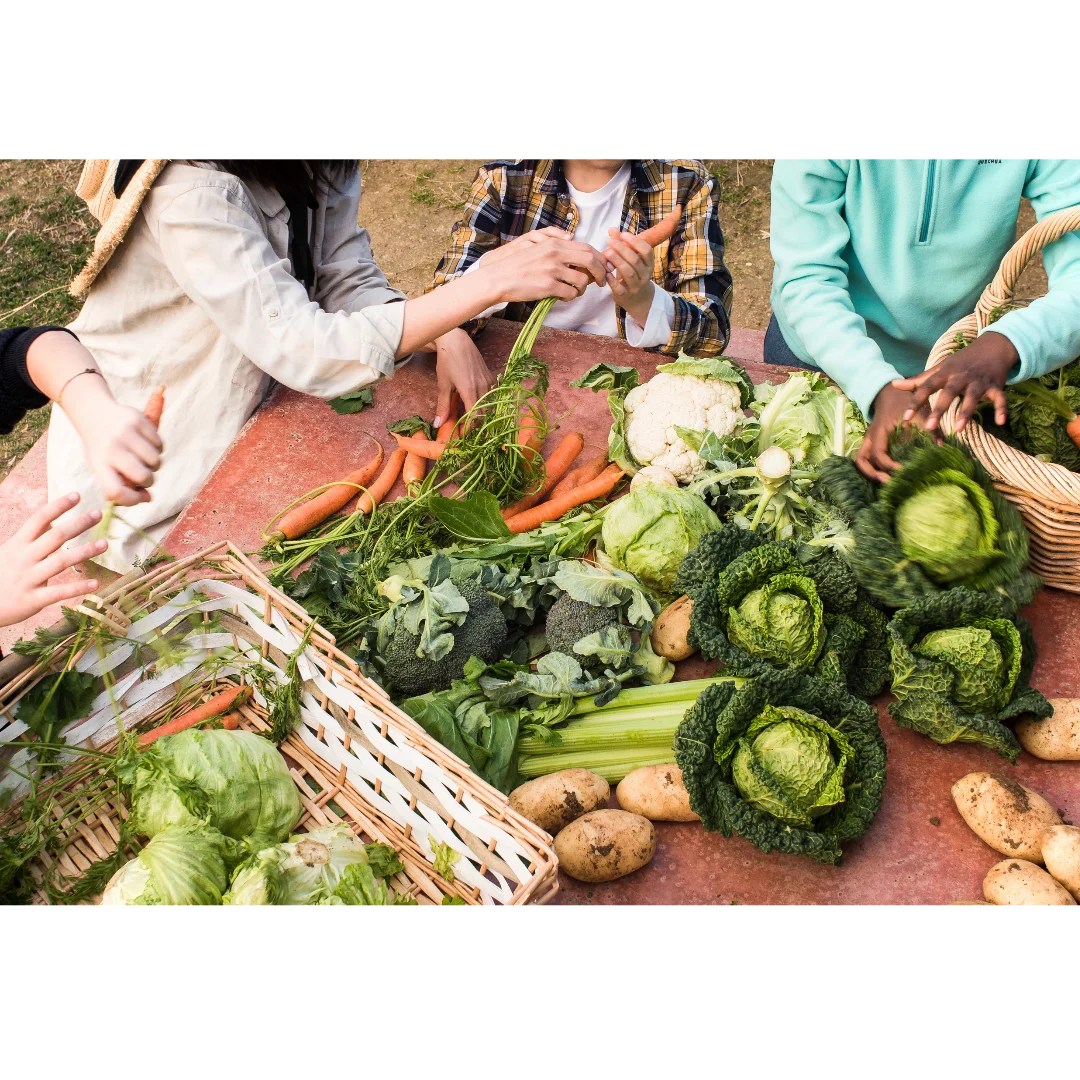
Through their visit to the local farm, the kids learn the role farmers play in our community, some of a farmer’s daily duties, and the tools farmers use. We also learn basic economic concepts and how farmers sell their products to people or sometimes trade them with other farmers for goods they need. We learn about where these products can be bought–farmers’ markets and grocery stores. While at the farm, we take a lot of pictures and post them in the classroom when we return. We refer back to these pictures and ideas through future discussions and investigations. We make connections when drinking milk at lunch or when playing in our pretend grocery store/farmers market during dramatic play. When we plan our shopping list for our feast, we discuss which items on the list came from a farm. We also put some produce into our centers to explore using our five senses.
How are the children involved in preparing their own dishes from start to finish?
First, the students determine which foods they would like at their feast. Then, they ask their families for recipes or look some up that incorporate the foods they’ve picked. Then they make a shopping list of the ingredients they need. We then send the shopping list to families, who volunteer to bring items in. The kiddos go to the grocery store or market with their parents to see firsthand where the ingredients are coming from. The students then follow their recipes, counting and measuring, to prepare the foods for the feast.
How have these hands-on experiences shaped the children’s curiosity about nature and food?
Whenever I go into the classroom during snack or lunch, the kiddos are talking about the foods they are eating and where the foods came from. This immediately sparks conversations about their experiences throughout the unit. The families start to carry over a lot of these ideas at home, and we hear more kids coming in talking about their experiences with helping their parents cook at home. The students also become more interested in how things grow and what things need to grow. This often leads to conversations about the effects the changing seasons have on things that grow and where the produce from the stores comes from during colder months. In the spring, we do a whole unit on Mother Earth that goes deeper into the life cycles of plants. It is always nice to be able to activate prior knowledge from this unit because we already have a baseline of knowledge and experiences the students have shared together.
Imagination Childcare Academy, along with their Quality Improvement Specialist, Rachel Zielinski, has created opportunities for the students to acquire healthy habits and lifelong skills in accordance with the QUALITYstarsNY Physical Well-being and Health Standards, which promote the importance of children having access to nutritious meals, physical activities, and outdoor time and spaces as part of their early care and education. QUALITYstarsNY partners with the Child and Adult Care Food Program, Hunger Solutions NY, Creating Healthy Schools and Communities, and Farm-to-ECE to connect QUALITYstarsNY participants to resources that encourage healthy living.